 OnePay Later
Gaming & Entertainment Financing: Fund the Hobby Without Feeding an Impulse
This Is a Want Category — and That Changes the Rules
Gaming gear is a want, not a need, so OnePay Later holds this category to a stricter standard: plans here must pass every affordability test with room to spare, because nothing on this page is an emergency.
Let us start where most financing pages refuse to: nobody needs a gaming PC. The brake job cannot wait; the console launch absolutely can. That honesty is not a reason to skip this category — wants are a legitimate, joyful part of a working budget, and a hobby that provides hundreds of hours of entertainment per dollar compares favorably with almost any other leisure spending in American life. It is, however, a reason to hold plans here to the strictest version of every rule on this site.
Concretely, that means three upgrades to the standard OnePay Later playbook. The tenth rule becomes a hard ceiling, never a stretch target. The one-plan-at-a-time discipline becomes absolute — entertainment never justifies a stack. And a waiting period enters the process, because the single biggest risk in this category is not the price of the gear; it is the speed of the decision. Everything below is built on those three adjustments.
What Real Setups Cost, All-In
Honest all-in numbers: current consoles run $450–$700 with a game and extra controller, capable gaming PCs $900–$2,000, high-end builds $2,500–$4,500, and VR setups $350–$800 on top of the hardware that drives them.
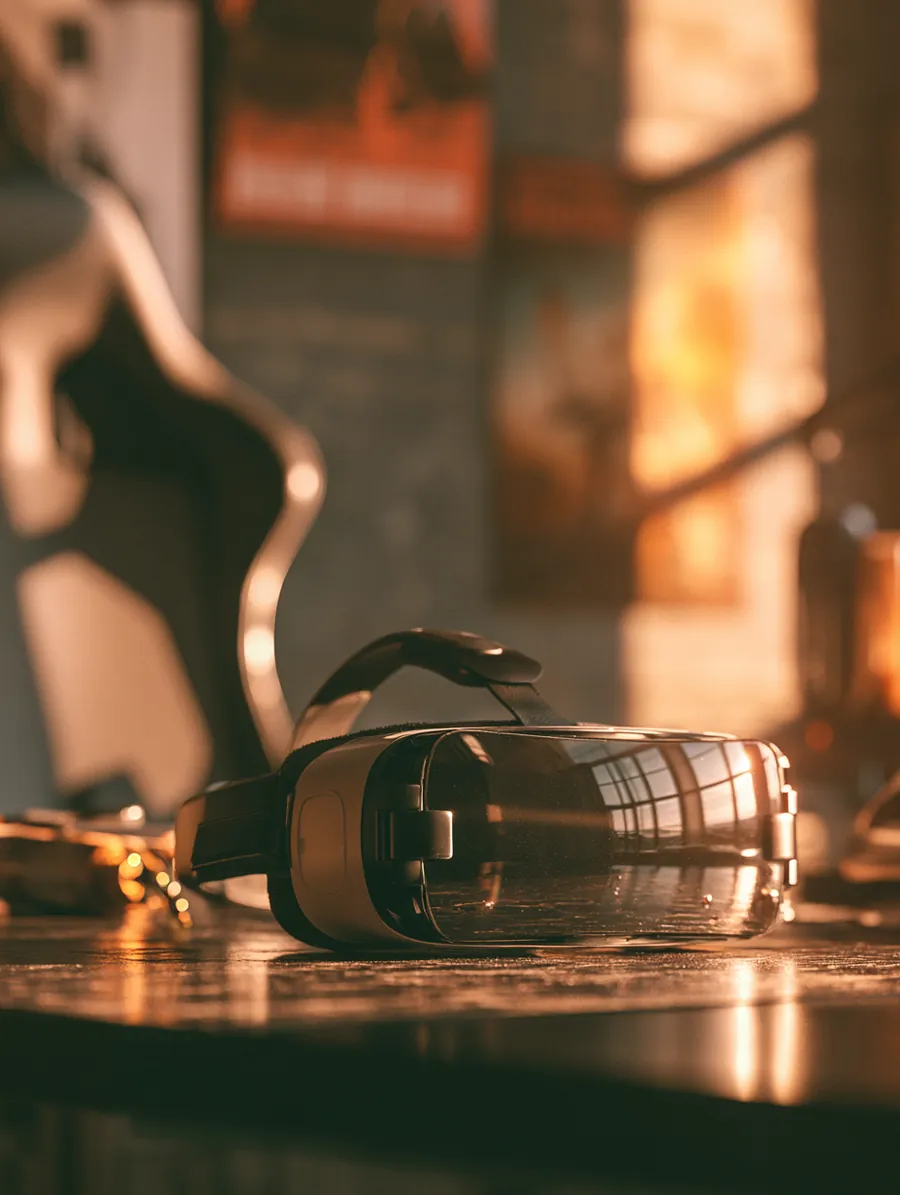
Sticker prices in this hobby are openers, not totals, and pricing the real number is the first act of discipline. A current-generation console lists around $450–$500, but the realistic day-one cart — second controller, one full-price game, a year of the online subscription — lands near $650. A gaming PC that comfortably runs modern titles at high settings builds out between $900 and $2,000 depending on the graphics card, and the tower is not the whole story: the monitor worthy of it adds $200–$500, and peripherals another $150–$300. High-refresh, high-resolution ambition pushes complete builds into the $2,500–$4,500 band. VR adds $350–$800 for the headset alone, plus the PC muscle to feed it.
Write your version of that arithmetic down to the dollar before any OnePay Later plan enters the conversation. The exercise does two things at once: it produces the correct request amount, and it frequently produces a cheaper decision — the moment "a PS5" becomes "$687 all-in," a meaningful number of people discover the previous-generation console at $250 delivers ninety percent of the joy. Both outcomes are wins. The only loss is financing $499 of a $687 reality and meeting the difference on a card.
The 30-Day Rule
Write down the exact setup and its all-in price, then wait thirty days — if you still want precisely that at precisely that price, proceed with confidence; most impulse configurations do not survive the wait.
This category gets a rule no other page on this site needs, because no other category is marketed with countdown timers and launch-day hype. The mechanism is simple: specify the want completely — model, configuration, peripherals, all-in price — put it in a note on your phone, and date it. Then wait thirty days while doing nothing except noticing whether you still think about it.
The rule works because it separates two feelings that checkout screens deliberately blur: wanting the thing, and wanting the buying of the thing. A month later, genuine wants are still there — often sharpened, sometimes improved by a price drop or a revision announcement that waiting revealed. Impulse configurations, meanwhile, quietly dissolve; the note becomes a small museum of purchases you are glad you skipped. Readers who adopt this habit report the same arc: the first wait feels like deprivation, the third feels like a superpower, and every plan that survives the month gets signed with a calm that no launch-day purchase ever has. A OnePay Later schedule is a commitment measured in months; it deserves a decision measured in more than minutes.
Choosing Your Amount: $500 to $5,000
Request the all-in setup number that survived your 30-day note, keep the payment comfortably under a tenth of take-home pay, and prefer the shortest schedule that stays boring.
The tiers track the hobby's natural price points: consoles and VR kits in the starter band, serious PC builds in the middle, and the full high-end battlestation at the top. One category-specific note on schedules: entertainment gear depreciates and generations turn over, so favor the shortest schedule whose payment stays effortless — at the calculator's illustrative rate, a $1,400 build over six months estimates near $250 monthly versus $132 over twelve, and finishing the plan while the gear is still current simply feels better — a pattern the OnePay Later reviews echo again and again. The worked examples make the tradeoff concrete before you commit to anything.
Total Cost of Ownership: the Year After Checkout
Budget the hobby's recurring layer — games, subscriptions, and accessories typically add $300–$700 in year one — so the plan payment and the hobby's running costs never compete by surprise.

The hardware is the entry fee; the hobby has a subscription layer that outlasts any schedule. New releases run $60–$70, and even a restrained two or three per year is $150–$200. Online multiplayer subscriptions and game-catalog services add $60–$180 annually depending on tier. Accessories fail and multiply — a worn controller here, a headset upgrade there. A realistic first year adds $300–$700 on top of whatever the checkout said, and that layer runs concurrently with your plan payments.
The point is not guilt; it is collision avoidance. A $132 monthly payment that looked effortless in isolation shares its months with the $70 launch title and the subscription renewal, and budgets that never mapped the overlap experience it as mysterious tightness. Map it instead: plan payment plus a monthly hobby line, entered together in the same budget. If the combined figure still clears the tenth rule with room, the setup is genuinely affordable. If it only clears when the recurring layer is ignored, the honest move is a smaller request or a longer wait — arithmetic now beats archaeology later, digging through statements wondering where the month went.
When Financing Entertainment Makes Sense
A gaming plan earns its place when the purchase is planned, the price is verified fair, the payment is trivially affordable, and the schedule stands alone.
Put positively, the good version of this OnePay Later category is easy to describe because it is so specific. The purchase survived thirty days in the note. The price was checked against the market rather than accepted from a single glowing product page. The all-in number, recurring layer included, sits comfortably inside the budget. The payment is small enough that describing it as "boring" is accurate rather than aspirational. No other schedule is running. And — the underrated one — the household agrees: a plan for shared-space entertainment signed unilaterally has a way of costing more than money. Check every box and a OnePay Later plan here is what financing should be: a planned want, moved across time, enjoyed immediately, finished on schedule, remembered fondly.
When It Does Not
And the bad version is just as specific, so this page will name it plainly. Do not finance entertainment to soothe a hard week — the gear will outlast the mood, but so will the schedule. Do not open a gaming plan through OnePay Later or anywhere else while another schedule is running; wants wait, that is what makes them wants. Do not finance a launch price that history says drops within a year unless playing at launch is genuinely worth the premium to you — sometimes it is, and honesty about that beats pretending. And do not let a payment plan launder a price you would refuse to pay whole: $1,800 split twelve ways is still $1,800, plus the plan's cost. If reading this section produced a small sting of recognition, the kindest advice on this page is the cheapest: wait one month, keep the note, and let the want prove itself. The games will still be there — they always are. And when a want does survive its month, notice how different the purchase feels: researched instead of rushed, sized instead of guessed, and carried by a OnePay Later schedule you chose on a quiet evening rather than a checkout timer. That version of the hobby is the one your future self keeps thanking you for.
A Worked Build: Pricing a First Gaming PC Honestly
A real-shaped example: a "$1,099 PC" becomes a $1,720 all-in setup on paper, survives the 30-day note at $1,650 after a price drop, and runs through OnePay Later at roughly $295 monthly over six months at the illustrative rate.
Watch the discipline work on the category's classic purchase. The want begins as a prebuilt tower advertised at $1,099. The all-in exercise from earlier does its job: the monitor that does the graphics card justice adds $280, mechanical keyboard and mouse $130, headset $85, and the first year's recurring layer — two full-price releases plus a catalog subscription — a further $210 on the honest ledger. All-in: $1,720. The note goes in the phone, dated, exact configuration specified, and the OnePay Later tab closes for a month.
Thirty-one days later the want has survived — sharpened, even, because the wait caught a sale: the same tower now lists at $1,029, pulling the hardware total to $1,650. Her take-home pay is $3,400, ceiling $340, and this page's stricter standard says the payment should sit well under it, not lean on it. The calculator frames the finalists: twelve months estimates $156 — effortless, but a year is a long tail on hardware that depreciates. Six months estimates roughly $295: inside the ceiling with room, finished while the build is still current, total cost of the split visibly smaller. Shortest boring schedule wins, exactly as the guidance upstairs predicted. She requests $1,650 through OnePay Later — the recurring layer stays in the monthly budget where it belongs, never financed — reviews the offer's five numbers, and anchors the draft after pay day.
The epilogue is the part worth copying. Because the subscription line was budgeted beside the OnePayment from day one, launch month arrives without mystery tightness; because the schedule was six months and not twelve, the plan closes before the next generation of graphics cards even ships. The note in her phone gains a second entry — a VR headset that did not survive its thirty days — and the museum of skipped purchases quietly pays for part of the next real one. Wants funded this way stay fun, which was the entire point of the category.
Quick Questions About Gaming Plans
Is financing gaming gear ever reasonable?
Yes — for a planned purchase at a verified price with an effortless payment and no other schedule running. Miss any of those and the answer flips.
Console now, games later?
Total the realistic first-year setup and decide on that number. Splitting the financing between a plan and a card is how hobbies lose track of their cost.
Are PC parts and upgrades covered?
Yes — GPU upgrades, full builds, VR kits, and streaming setups all fit, inside the $500 to $5,000 range with the same fixed structure.
What is the 30-day rule?
Specify the exact setup and price, wait thirty days, and proceed only if the want survives intact. It is the single highest-value habit in this category.